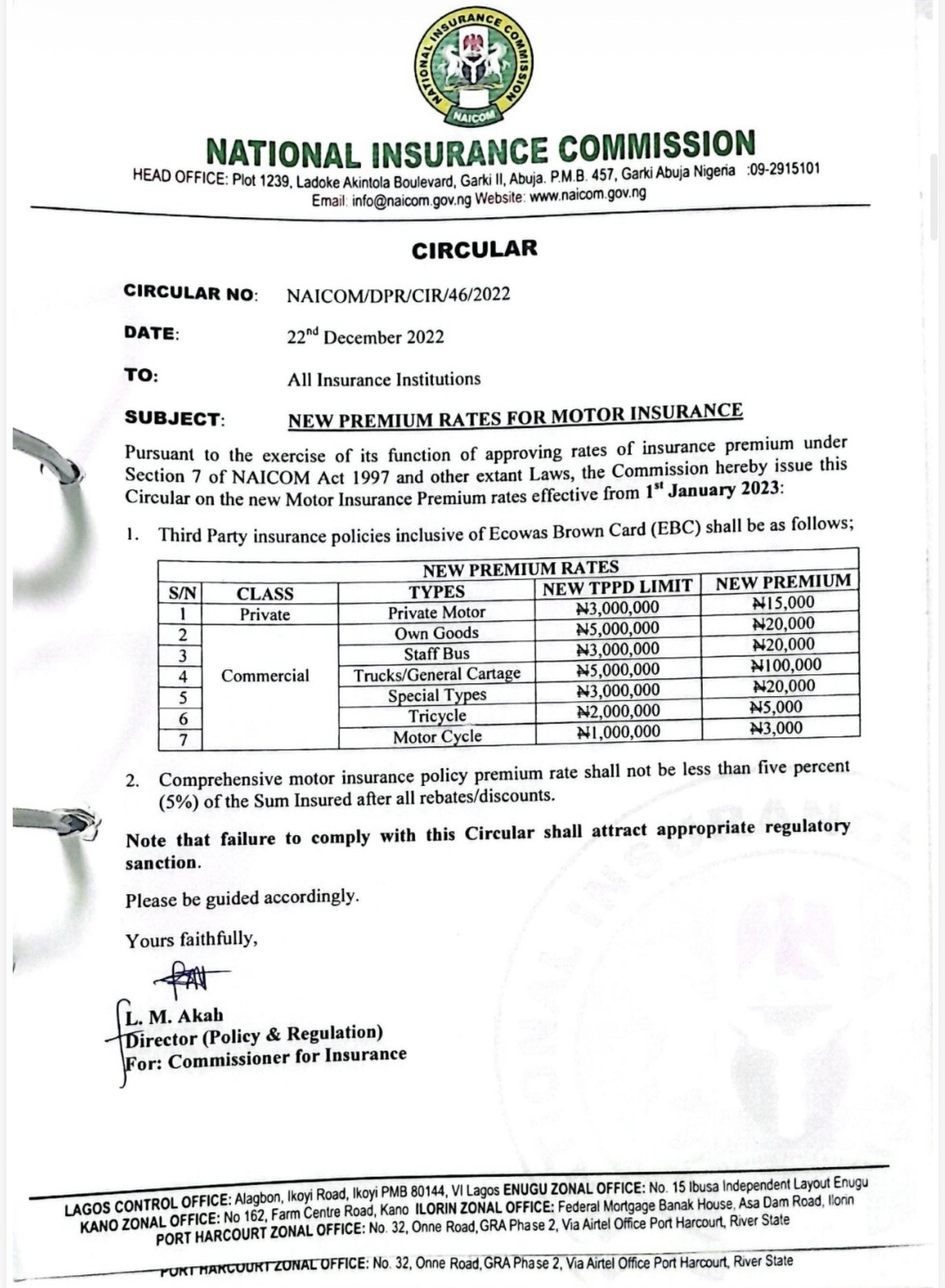
Comprehensive cover costs more than third-party insurance, because it protects more. NAICOM still sets a floor under how low that cost can go.
The minimum rate NAICOM sets
Insurers cannot charge below 5% of the sum insured, applied after any rebates or discounts a policyholder qualifies for. This is a floor, not a fixed price.
A quote that lands under this rate is worth questioning rather than accepting at face value.
What 'sum insured' means for your premium
Your premium is the minimum rate applied to the sum insured, the value you and the insurer agree the vehicle is worth. A higher sum insured means a higher premium, in direct proportion.
Two identical vehicles can carry different premiums if their owners chose different sums insured. Neither figure is wrong. They reflect different choices about how much cover to buy.
Comprehensive versus third-party cover
Third-party cover, at a fixed rate such as ₦15,000 for a private car, only pays for damage your vehicle causes to someone else. Comprehensive cover adds protection for your own vehicle too, which is why the cost sits higher.
For a company relying on a vehicle to operate, that gap in protection is worth weighing carefully. See third-party rates by vehicle type for the baseline these sit above.
Why quotes below the minimum are a red flag
A quote below 5% of the sum insured is not a better deal. It is a sign the quote does not follow NAICOM's own floor, which raises questions about what else in the policy might fall short.
Ask any insurer offering a below-floor quote to explain how it complies with NAICOM's rate rules before you sign anything.
Insuring more than one vehicle
A business with several vehicles applies the same minimum rate to each one's own sum insured, rather than a single blended figure across the fleet. Get a schedule that shows each vehicle's sum insured and premium separately.
That breakdown makes it easier to check every vehicle actually meets the minimum, not just the fleet's total premium. It also makes renewal simpler, since you can update one vehicle's sum insured without recalculating the whole fleet by hand.
If insurance is one of several regulators your business is working through, our guide to which regulator you actually need puts NAICOM alongside the others.
Common mistakes
- Comparing premiums without comparing the sum insured. A lower premium on a lower sum insured is not automatically a better deal.
- Accepting a quote under the NAICOM minimum. Ask what the insurer is cutting to reach that price.
- Confusing comprehensive cover with the compulsory minimum. Only third-party cover is a legal requirement.
- Insuring a whole fleet on one blended figure. Check each vehicle's own premium against its own sum insured.
For the rest of this series, see the SME regulators hub.